Lighting Africa (with PLEDS powered by microbes!)

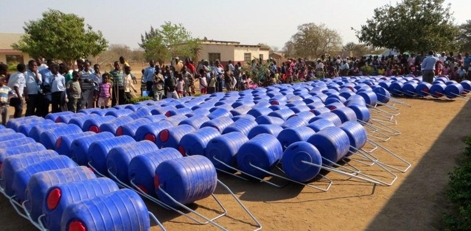
In most African countries, 95% of the population is living off-grid with no access to electricity. To address this energy and lighting crisis, the World Bank held a competition and chose 16 winners. Read about the fascinating work of one of them, Lebone Solutions, here…
Improving Adult Literacy at Night with no Electricity
Where Sanitation Infrastructure Does Not Exist, Now There Is the Dignity Toilet
Viking Ship of Icecream Sticks
Mirrored Forrest Sculpture

I’m straying from my humanitarian design theme a little here because I love when art and nature come together in such a thoughtful and beautiful way. Michel de Broin is the brilliant artist who produced this work called “Superficial.”
Grow Your Home: MIT concept house made from 100% living nutrients

I was blown away by this idea for a living, breathing house that is a direct contributor to the ecosystem. In this era of non-stop and irresponsible development, it’s comforting to know someone is working out every detail of how to make this happen. Pics and explanations here. Story via ecofriend.org.
Training Crows to Buy Peanuts First, Save Human Lives Next?

Incredible story. An inventor is trying to harness the intelligence of crows and use it for good: “Don’t hate the crows… Just let them save you.”
Read the npr story…
Get more in-depth information about this project or donate here.
Poussin and Nature - his “moral passion”

A really interesting New York Times review of the exhibition, “Poussin and Nature: Arcadian Visions,” currently at the Metropolitan Museum. I am an admirer of Poussin and regard his consideration for nature and restrained, romantic perspective in general as an ideal emotional base from which to operate as both fine artist and designer. If only I lived in New York - I’d love to see this show…
Design For Development’s Bike Ambulance Project in Namibia

With this project, Vancouver-based charity, Design For Development is “not only seeking to improve health transportation — but to increase skills and opportunities for members of the communities that they work with.” More…
Solar powered “StarSight Virtual Utility Poles” in Istanbul, Turkey

70,000 Street lights across the city with internet access by 2011…
http://blog.cooperhewitt.org/2007/10/11/virtual-emergency-network
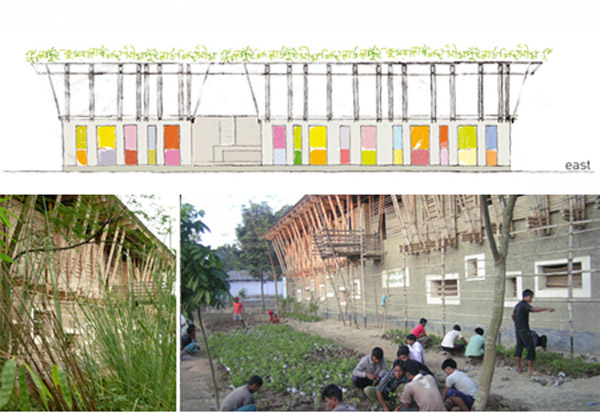
Studio Mango designs Girls School in Rongai

Now there will be a good school for girls in this region of very male-oriented Kenya: http://www.humanidesign.org/girlsschool2.html
Preview of Eyebeam Eco-Vis Challenge finalists

One of the most important functions/services of green, socially responsible design is to educate.
Based on the idea that being aware of the current environmental crisis doesn’t mean that it is easy to recognize its extent and complexity, the “Eco-Vis Challenge” invited artists and designers to submit projects which make meaningful patterns emerge from the mass of environmental data. http://www.we-make-money-not-art.com/archives/2008/01/the-competition-is-part-of.php
A “Children-run Radio Station…in Jakarta’s Largest Dump”

Children living on/near a gigantic garbage dump in Indonesia are running a community radio station which broadcasts children’s music, poetry and news each day. I read about this on Eyeteeth and just had to post it. Here’s the story:
Live from the Dump: Broadcasting Hope from an Unlikely Site
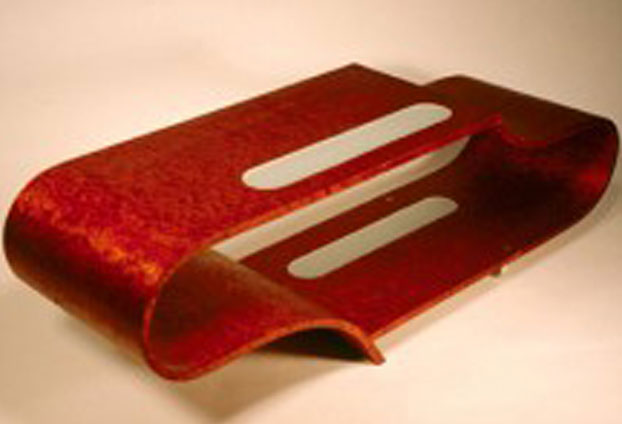
Tropical Salvage: “Old Wood, New Use, Positive Change”

I have had the privilege of working for Tim O’Brien, founder and president of this Portland-based company, so I’ve seen firsthand the kind of compassion and dedicated zeal it takes to envision and actually realize a project as far-reaching and socially positive as Tropical Salvage. In brief, this company is making a difference by:
- RECLAIMING, RECYCLING and DISCOVERING select tropical hardwoods.
- CREATING job opportunities in areas of economic hardship.
- BUILDING unique, functional and affordable furniture and other products.
- PROMOTING environmental health and education.
- RAISING consumer awareness.
There’s so much to this story and the site will tell you everything you want to know - including how Tropical Salvage is collaborating with the Institute for Culture and Ecology to create the Jepara Forest Conservancy (a public forest park and environmental education facility). And if you happen to need something new for your home, you can peruse the dozens of pics of beautiful furniture made from ancient hardwoods for sale. Either way, prepare to be totally inspired!
Philips Smokeless Stove Uses 80% Less Fuel, Saves Lives
Read treehugger’s article/forum about it here.
EduCongo: a Portland-based non-profit changing lives in the DRC

This is not a design-related story, but it could be at some point. In any case, I want to include EduCongo in my blog because it was co-founded by two brothers in Portland (where I live), and is the client of my friend Brett who built my site (and www.educongo.org).
Here are some highlights from the site:
- In the 5-year history of the school that EduCongo established, the number of students has gone from 198 to 1778.
- Only 56% of women in the Democratic Republic of Congo are literate compared to 82% for men. Of all school age girls, only 51% are enrolled versus 66% of boys. EduCongo has made a conscious effort to increase enrollment of girls who today make up half of the student population.
- Monthly parent literacy/involvement meetings are another way the school ensures the student has a chance to succeed in the classroom and in his or her community.
- November 2006 saw the completion of a medical facility that will provide access to health care for students, parents, and community members.
Bringing Movies to Refugees
One of the first projects I learned of that really tuned me in to this new direction in design was a very recent collaboration between Minneapolis-based design firm, Worrell Inc., and FilmAid International, a New York non-profit which screens educational and entertaining films in refugee camps all over the world. Together they have developed a mobile movie theatre. I think this is super cool but surprisingly, I have found almost no in-depth media coverage aside from a video on youtube of two Worrell designers speaking in general about industrial design for humanitarian aid. (One factoid which stood out to me in this video is that the average audience size for a film screening at a refugee camp is 30,000 people.)
Here is a brief perspective from Worrell’s site: “According to FilmAid International, there are more than 33 million refugees in the world. It is estimated that the average stay in a refugee camp is 17 years. Through our collaboration with FilmAid International, we’re using considered design to bring hope and education to those who need it most.”
Need Magazine is planning to cover the project in a future issue. I may try to write about it here as well if I can get an interview with Worrell and FilmAid. In any case I want to revisit this subject in more detail.
Trying to dig up info on the mobile movie theatre I found Eyeteeth (also out of Minneapolis I believe).
A Starting Point: NEED Magazine
I want to use this blog to cover developments involving humanitarian aid-oriented design, or “design for the other 90%” (of the world). I think this is the new design frontier and just about the most exciting thing to pay attention to right now. I can think of no better or easier way to get started than by introducing you to NEED Magazine, which seeks to “create exposure for humanitarian aid via an informative, artistic, visual narrative of human stories.”